



Made with all the love and care by Suhwoo © 2025
Other Projects
Context
Turning Social Noise into Financial Signal
Traditional financial news is often too slow, while social media is too chaotic. $talk bridges this gap by aggregating real-time sentiment from X and translating complex jargon into clear insights. It empowers young investors to trade with confidence using live data rather than outdated headlines.
Challenge
Why it is so hard for beginners to trade with confidence:
Traditional news lags behind real-time action. By the time headlines publish, market prices have often already moved.
The 'Latency' Gap

Infinite charts and undefined metrics create cognitive overload, causing users to hesitate or gamble instead of investing.
Analysis Paralysis
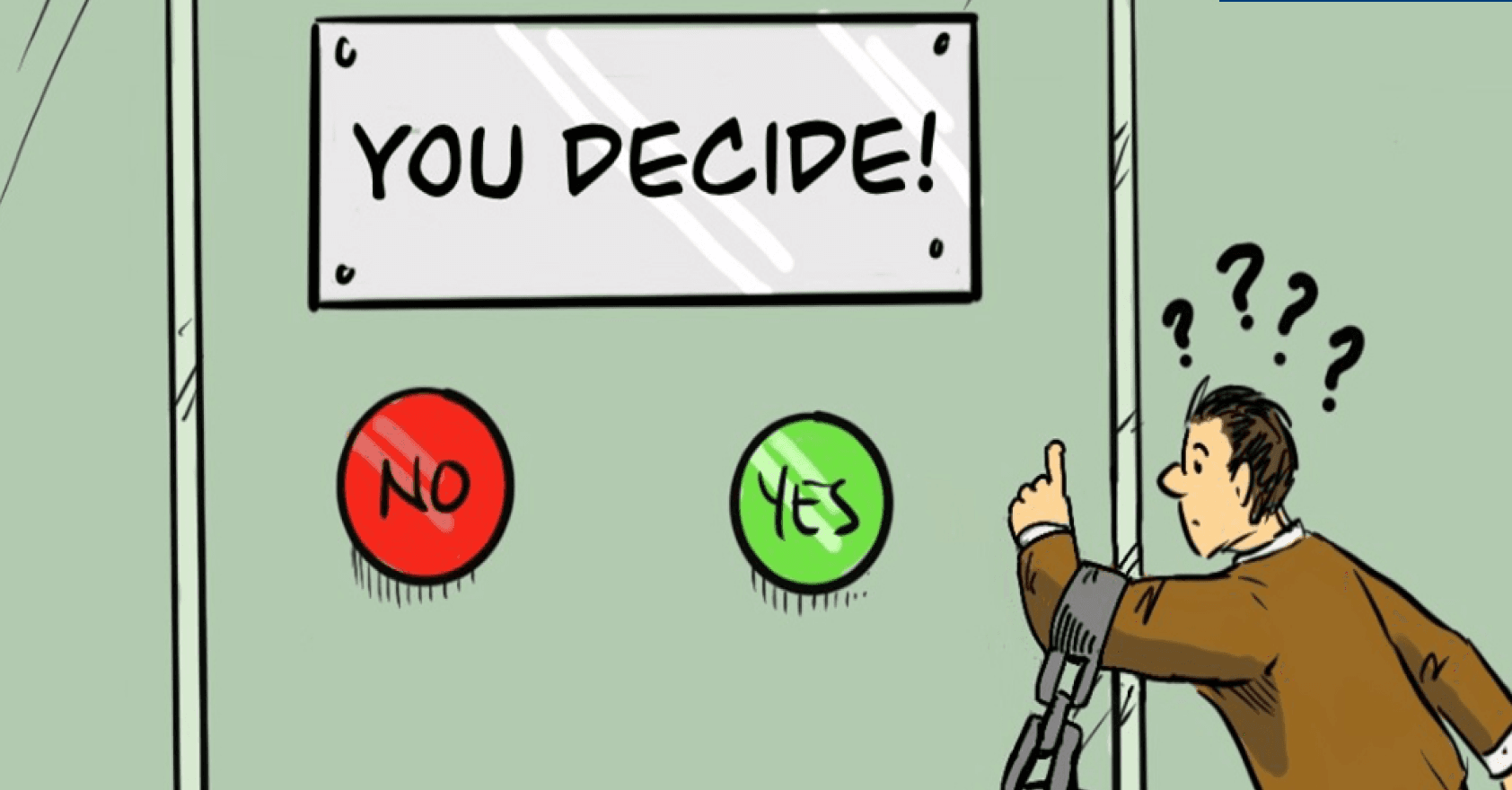
Toggling between news feeds, social apps, and brokerages creates friction and leads to disjointed decision-making.
Fragmented Experience

Platforms like X are fast but unreliable. Bots and unverified rumors make it difficult to distinguish signal from hype.
Social Noise & Spam

Problem Statement
How might we filter the chaos of real-time social media into a trustworthy, simplified stream of financial insights for the next generation of investors?
Goal
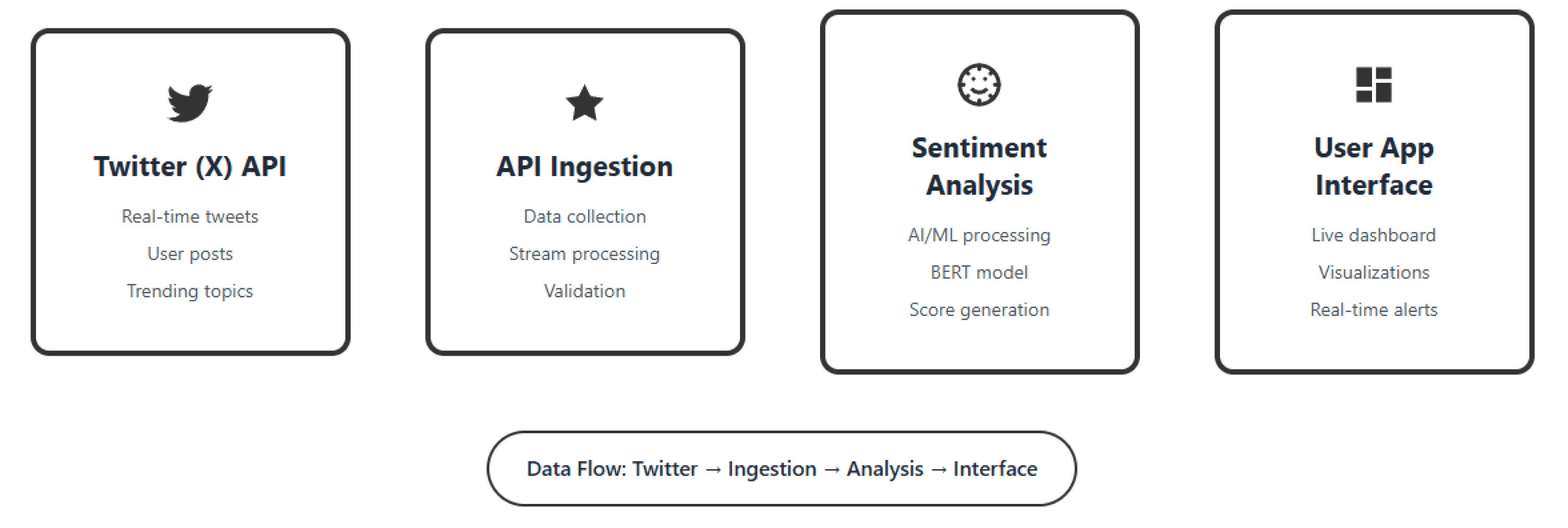
$talk utilizes the X API to capture breaking market conversations the moment they happen. It applies an AI-driven layer of noise reduction and simplification to deliver institutional speed with consumer-grade clarity
Process
From Chaos to Clarity: A 24-hour Sprint
1) Discovery
& Audit
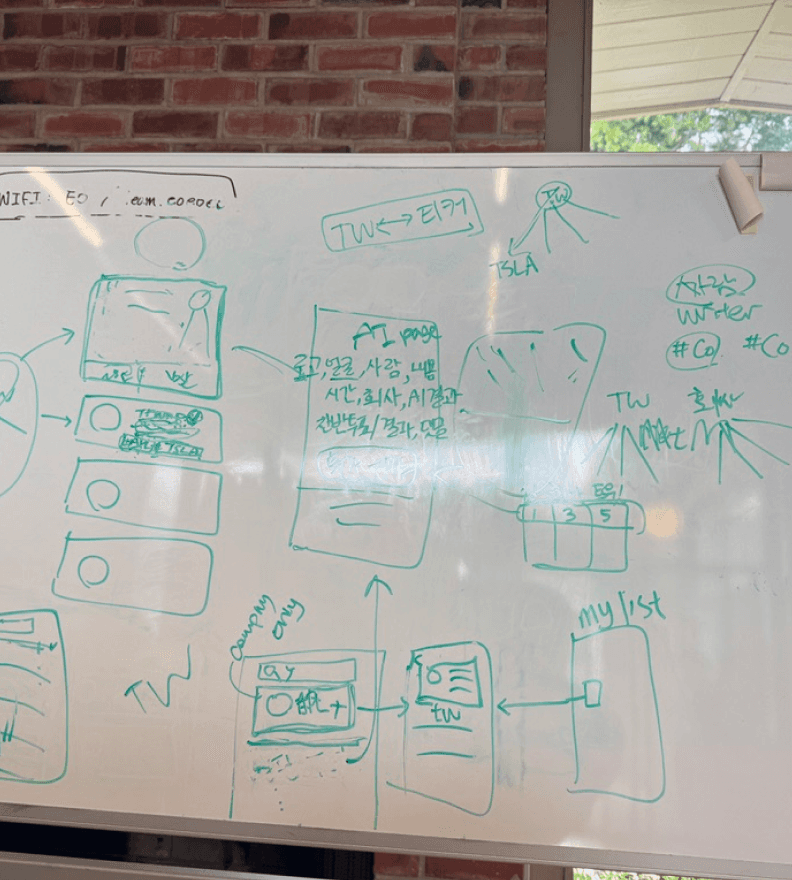
2) Logic
& Definition

3) Interaction
Design
4) Technical
Execution
User Research
Understanding the Modern Investor
To validate the problem, I and the team surveyed 5 expert investors and conducted in-depth interviews. Two key insights drove the product strategy:
Observation: Users consistently reported that traditional news alerts arrive too late to be useful. Consequently, they default to social platforms for immediate updates, accepting the noise and clutter just to gain a 'real-time' advantage.
Insight 1: Speed over Polish
Design Decision: I prioritized a "Live Feed" as the home screen rather than a traditional static dashboard to match this mental model.
Observation: 80% of participants abandoned reading financial news articles when they encountered undefined terms like "Quantitative Easing" or "Short Ladder."
Design Decision: Implemented the "Tap-to-Explain" feature, allowing users to get instant definitions without leaving the article context.
Insight 2: The "Jargon Wall"
User Persona
Background
Emily is a 22-year-old Economics student seeking financial independence. She tracks social media trends but distrusts hype, needing to validate viral tips with clear data before risking her own money.
Background
David is a high-earning professional with disposable income but a demanding schedule. He wants to aggressively grow his portfolio but needs a streamlined, low-maintenance approach that fits into his limited free time.
Frustrations
Emily fears falling for "pump and dump" schemes due to misinformation. She finds platforms either too gamified or too complex, leading to analysis paralysis because she cannot confidently assess risk.
Frustrations
David is overwhelmed by the constant noise of market news and cannot spend hours researching individual stocks. He stresses about missing critical buy/sell windows because he cannot monitor his portfolio during the workday.
Emily Park, 22
David Chen, 34
Student, San Francisco
Marketing Director, San Francisco
Competitive Analysis

Robinhood
Strength:
Gap:
Exceptional UX for executing trades
Frictionless and visually polished
These apps are great for buying, but terrible for knowing what to buy. Their news feeds are generic, syndicated wires that rarely explain why a stock is trending on social media, forcing users to leave the app to investigate.
Bloomberg & CNBC
Strength:
Gap:
High credibility and deep, professional market analysis.
By the time a segment airs or an article is published, the "alpha" is gone. Furthermore, the content is often gated behind paywalls or dense jargon ("Quantitative Easing," "EBITDA") that intimidates the entry-level user.


How It Works
Ingesting live social signals and filtering for relevance
Design Evolution
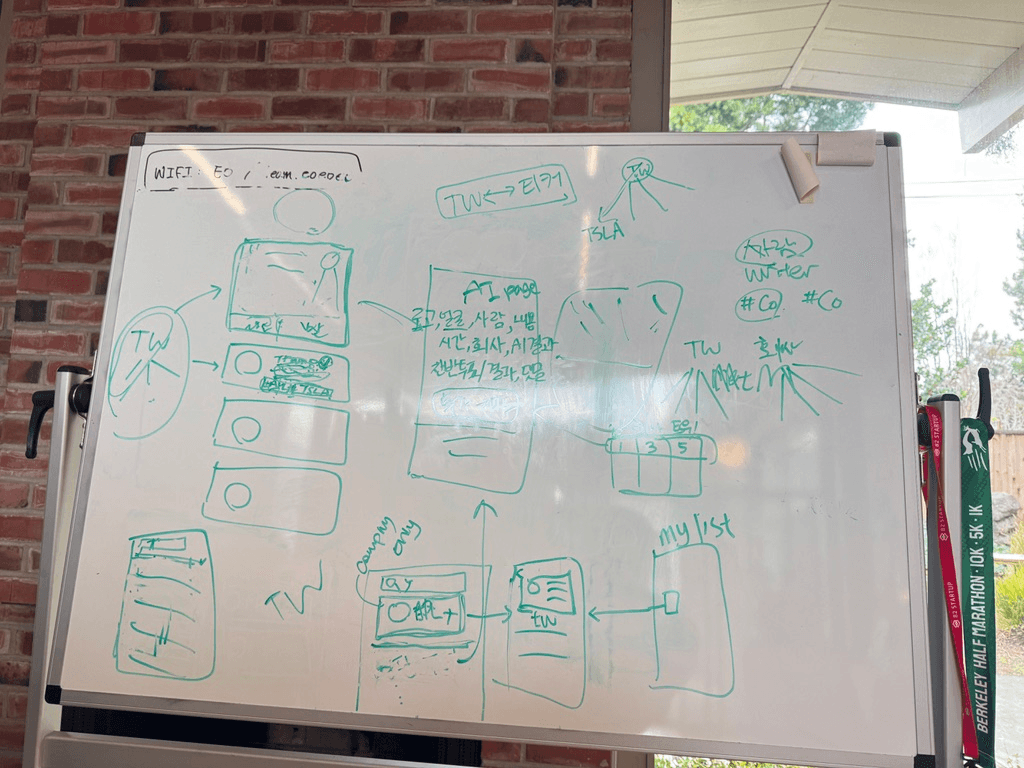
Iterating from rough sketches to a data-driven interface
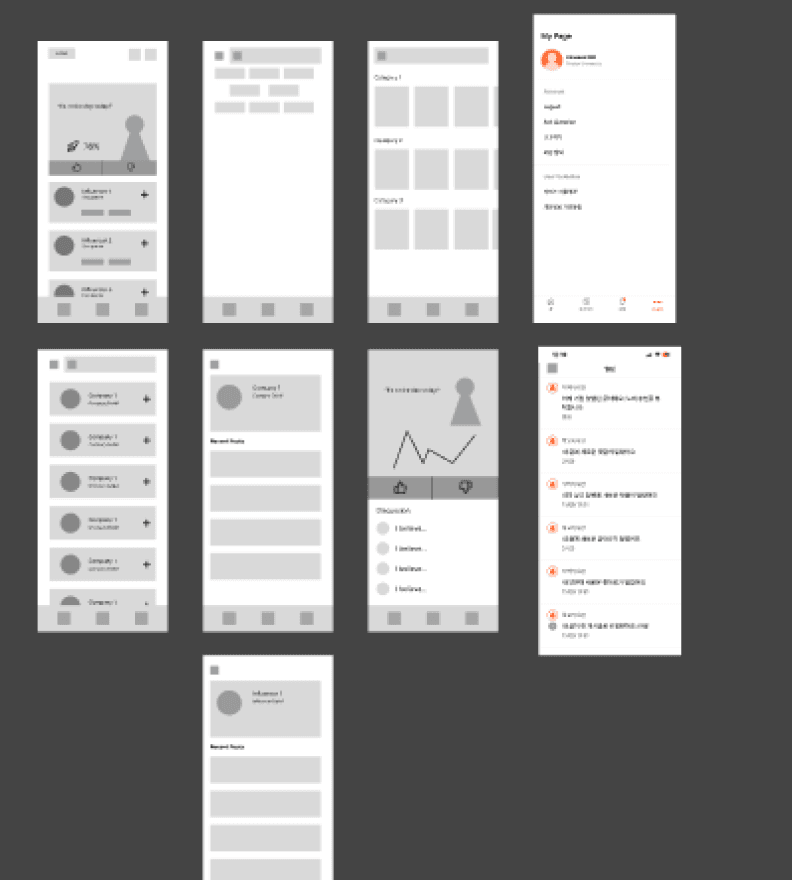
The biggest challenge was fitting complex financial data (Price, Hype Score, Volatility) onto a small mobile screen.
Low-Fidelity (Hierarchy): I explored list vs. card layouts, ultimately choosing modular cards to better chunk complex financial data for novice users.
Design System
Ensuring consistency and accessibility at scale
To speed up the 24-hour build, I created a lightweight atomic design system. We utilized Inter for maximum readability on mobile and designed all "Gain/Loss" indicators with both color and shape (arrows/triangles) to ensure full accessibility for color-blind users.
Color Palette
Pretendard
Pretendard
Pretendard
Pretendard
Pretendard
Pretendard
Pretendard
Pretendard
Pretendard
Pretendard
Pretendard
Typography
Donald J. Trump
“Based on the tremendous cost and cost overruns of the Lockheed Martin F-35, I have asked Boeing to price-out a comparable F-18 Super Hornet!”

NVDA
87%
1,344
1,345
Button Component
Implementation & Final Solution
Demonstrating technical execution and the final product value
To bridge the gap between design and code at speed, I utilized Replit to instantly bootstrap our React Native (Expo) environment. This zero-setup approach allowed me to translate my Figma components directly into the codebase, enabling real-time collaboration with the backend team to connect live API endpoints without merge conflicts.
The result is $talk, a mobile platform that acts as a 'Check Engine Light' for stocks. By visualizing the gap between Social Hype and Financial Reality, the Truth Meter empowers users like Emily to make data-backed decisions instantly.
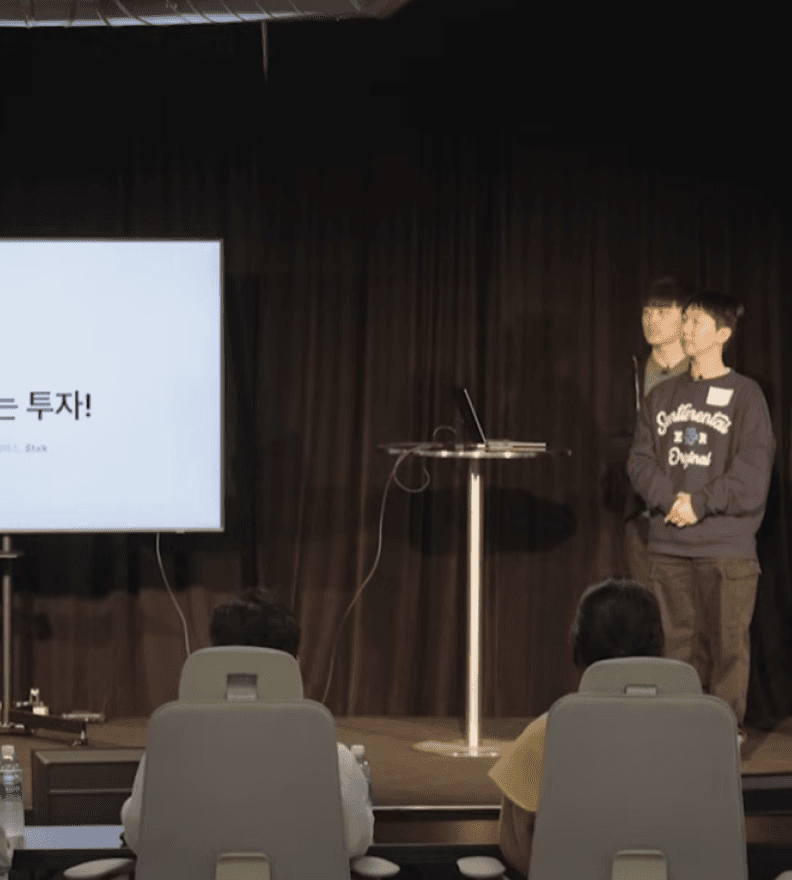
Watch the live demo: Please watch the hackathon presentation below from the beginning.
(Note: Please enable English Subtitles (CC) for the best experience.)
Conclusion
Code informs Design
Working in the frontend repository helped me understand the technical cost of my decisions immediately. I didn't design "impossible" features; I built solutions I knew we could ship. This project proved that the best UX comes from synchronizing design intent with engineering execution.
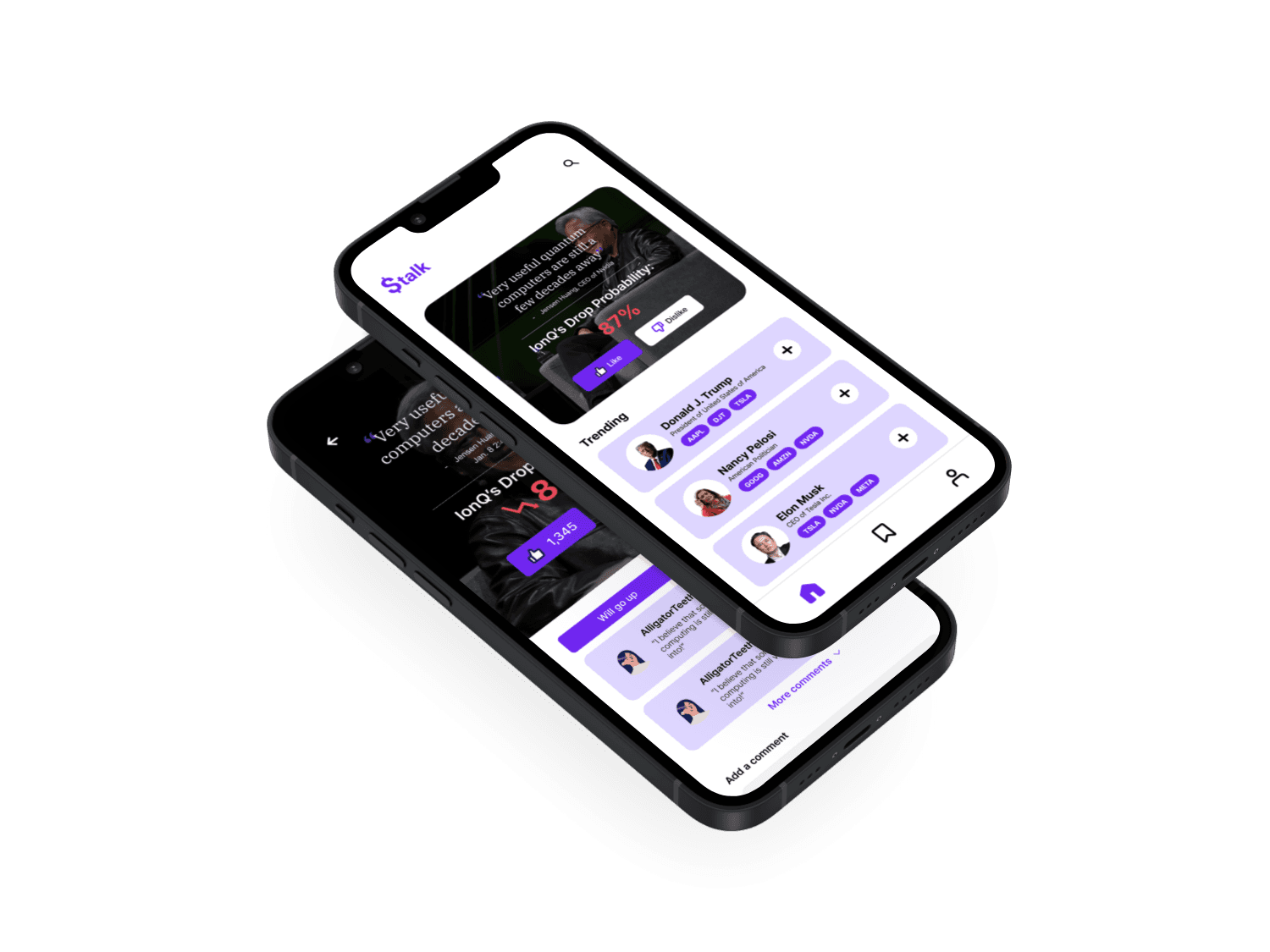
$talk
Simplifying market access by merging real-time social signals with clear, actionable guidance.
Hack the Valley Hackathon
Tools Used






Role
UX Designer
Team
1 UX, 2 Backend,
2 Frontend
Timeline
February 2025
(24-Hour Hackathon)